
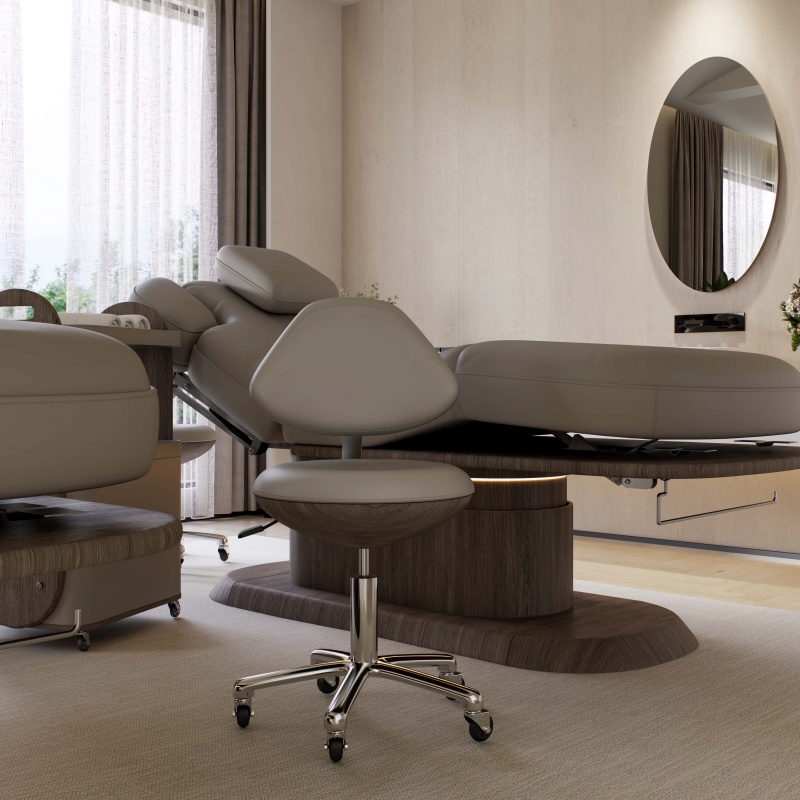
Designing a luxury spa room is more than just creating a visually appealing space—it’s about evoking serenity, enhancing functionality, and offering an unforgettable wellness experience. Whether you’re a wellness entrepreneur, a spa designer, or a homeowner looking to create a personal oasis, this article will inspire you with ideas to craft a luxurious and harmonious spa interior that aligns with elegance and relaxation.
1. Embracing Nature in Spa Design
One of the key elements in luxury spa design is creating a seamless connection with nature. Incorporating natural materials like stone, wood, and plants not only enhances the aesthetics but also fosters a sense of calm. Large windows that invite natural light or an indoor-outdoor layout can amplify this connection.
For example, a spa room with a stone accent wall, paired with warm wooden flooring and lush greenery, creates an organic, grounded atmosphere. Adding water features, like a small indoor fountain, can further elevate the sensory experience.
2. Minimalist Elegance with Functional Design
Luxury doesn’t have to mean over-the-top. Often, less is more when it comes to high-end spa interiors. A minimalist design approach focuses on clean lines, neutral tones, and uncluttered spaces, which can evoke a sense of tranquility. However, minimalism must be balanced with functionality, especially in wellness spaces that require operational efficiency.
For instance, consider built-in storage that integrates seamlessly with the design, or multi-functional furniture that saves space without compromising on elegance. A massage table that doubles as a sleek design element when not in use is an excellent example of form meeting function.
3. Lighting: The Key to Ambiance
Lighting plays a pivotal role in setting the mood of a spa interior. Layered lighting, combining ambient, task, and accent lighting, can transform the space throughout the day. Warm, dimmable lights work well for relaxation areas, while brighter task lighting is essential for treatment rooms.
For a luxurious touch, consider statement lighting fixtures like pendant lights with natural textures or LED-lit ceiling panels that mimic the night sky. Candlelight or hidden LED strips under furniture can also create a soft, inviting glow.
4. Personalization and Unique Touches
To truly make a spa room stand out, add personalized elements that reflect your brand or your personal taste. This could include artwork inspired by local culture, custom-designed furniture, or even a signature scent diffused throughout the space.
For example, a wellness space inspired by coastal themes might feature sandy beige tones, coral-inspired decor, and a subtle ocean breeze aroma. Personal touches like these can enhance the emotional connection clients or guests feel within the space.
Tips you need to know
Tip 1: Prioritize Acoustic Treatment
Unwanted noise can disrupt the ambiance. Use soundproofing materials or white noise machines to ensure a peaceful atmosphere.
Tip 2: Balance Aesthetic and Practical Needs
While it’s tempting to focus solely on design, make sure the layout supports ease of movement for clients and staff.
Tip 3: Choose Durable Materials
Spas are high-traffic areas. Invest in high-quality, moisture-resistant materials that are both elegant and long-lasting.
Tip 4: Incorporate Wellness Technology
From smart lighting systems to aromatherapy diffusers, technology can enhance the overall spa experience without being intrusive.